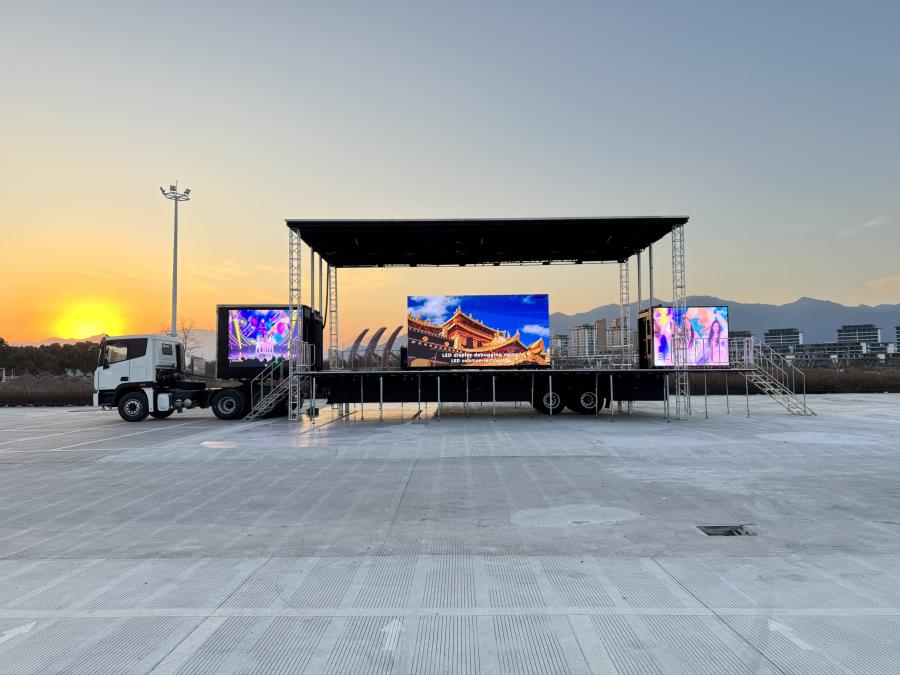
Investing in a mobile stage truck is a major decision for event production companies, government agencies, schools, and touring brands. A mobile stage truck presents an investment that lasts over a temporary stage rental, and one that affects the delivery of successful events firsthand. The consequences of a wrong purchase can be high maintenance, equipment failure, setup delay, and loss of operations.
With the increased number of mobile stage manufacturers competing in 2026, the mobile stage truck buying landscape has become more complex than ever. Some suppliers provide guaranteed engineering, a high level of automation and world-class support networks; others may only facilitate limited after-sales services. By asking the right questions before signing, buyers can minimize costly pitfalls and choose a solution that will benefit them in the future.
A mobile stage truck is a specially designed truck that morphs into an entire stage using hydraulic or electric deployment mechanisms. Professional sound systems, customised mobile stage lighting, LED screens, generator power and automation control are all available on a single mobile platform in many units.
There is an ever-increasing need for event configurations that reach the audience directly, hence increasing the need for the intelligent truck range. The government uses them for public relations, companies for road shows, and schools for performances and assemblies. The LED billboard truck have been gaining popularity since they feature both digital and full-stage capabilities in one chassis.
For buyers considering a mobile stage for sale, understanding the factors driving market demand can help identify the features and specifications that matter most for their intended applications. Whether the goal is an efficient mobile stage for rapid deployment or a highly customized event platform, defining requirements early is essential.
Before specifying the components of your mobile stage truck, consider how you will use it. It is important to know your usage profile because this will affect what components you will need in the mobile stage truck. For buyers researching mobile stage truck buying, understanding what drives this demand helps clarify which features matter most for your specific use case.
Here are the most common public-use applications driving mobile stage truck buying decisions today:

Q1. What type of events will the truck support?
Determine the purpose of the truck: entertainment, government campaigns, education, corporate activation or a combination of all four; each requires different specifications.
Q2. Indoor or outdoor usage?
Certain mobile stage trucks are suitable for outdoor use only, whereas others are meant to be used in the lobbies of convention centers, arena lobbies and covered pavilions.
Q3. Audience size requirements?
The size of the stage, the power of your PA system, and the size of your LED screen will all depend on your audience size. Understand your maximum expected crowd before finalizing specs on any mobile stage truck buying decision.
Q4. How often will the truck travel?
A daily multi-city deployment puts a great strain on the vehicle chassis, suspension system, and hydraulic stage components when compared with weekly regional deployments.
Q5. What climate conditions will it face?
Sealed electrical enclosures, corrosion-resistant structural coatings, and trucks in humid coastal areas require. For desert deployments, a generator building incorporating ventilation and UV-stable deck surfaces is necessary.
The mobile stage truck is also a commercial vehicle. The quality of the chassis, engine reliability, and fleet management capabilities will determine the long-term cost of operation. These considerations are critical for the mobile stage truck buying process.
Materials, load capacity, and certifications are key indicators of a reliable stage platform.
Q6. What material is used in the stage structure?
High-strength aluminium has good corrosion resistance and durability.
Q7. Wind-load certification available?
Check verified wind ratings and ask for documentation.
Q8. Rain resistance rating?
Confirm safe operation during rain and wet weather conditions.
Q9. Weight capacity of the stage floor?
Make sure performer and equipment will be safe on the stage.
Q10. Anti-slip surface included?
An anti-slip deck heightens the safety of the performers and crew.
Q11. Corrosion-resistant coating?
Surface protection aids in extending service life in outdoor applications.
Q12. Safety certifications?
Request copies of all relevant safety certificates.
Q13. Emergency evacuation provisions?
Look for exits, handrails, and available emergency escape ways.
Q14. Warranty on structure?
Knowing warranty terms and conditions.
Q15. Service life expectancy?
Inquire about durability and lifetime support.
Contemporary mobile lecture stages are bigger than box vans. Advanced chassis technology, smart telematics, and AI-powered fleet management help reduce operating costs, improve reliability, and maximize uptime throughout the vehicle’s service life.
The platform determines everything, ranging from fuel efficiency to road behaviour to maintenance to long-distance touring. These questions will determine if the truck is suitable for your operation.
Q16. Which chassis brand is used?
The chassis determines reliability, service availability, and long-term ownership costs. Inquire into the reasons the manufacturer chose that chassis and the manufacturer’s maintenance program.
Q17. Engine specifications?
Horsepower, torque, and emissions standards determine overall performance. Verify that the engine is capable of carrying full loads, rough terrain and letting go the local regulations.
Q18. Fuel efficiency?
Fuel costs significantly impact lifetime operating expenses. Ask for actual consumption data (not manufacturer’s predictions) for loaded operations.
Q19. Road compliance certifications?
Various road regulations from different countries and regions. Make sure that the truck complies with all weight, emissions and operating specifications of the intended use application.
Q20. Turning Radius?
Lower turning radius allows easier movement for schools, festivals, and limited event sites in the city.
Q21. What’s the longest distance you can travel?
Understand journey times and duration individually for better touring and enhance the lifespan of crucial components.
Q22. Suspension system quality?
Quality suspension helps keep LED screens, audio, and other such sensitive devices safe from vibrations and road shocks.
Q23. Driver Training Requirements?
Look at the driver’s training required, along with it being provided on purchase.
Q24. GPS Monitoring?
GPS tracking allows better route management and visibility of fleets across different locations.
Q25. Fleet management integration?
Predictive maintenance made possible by advanced telematics and AI fleet management will help avoid unexpected breakdowns and increase uptime for mobile stages rental businesses operating several units.
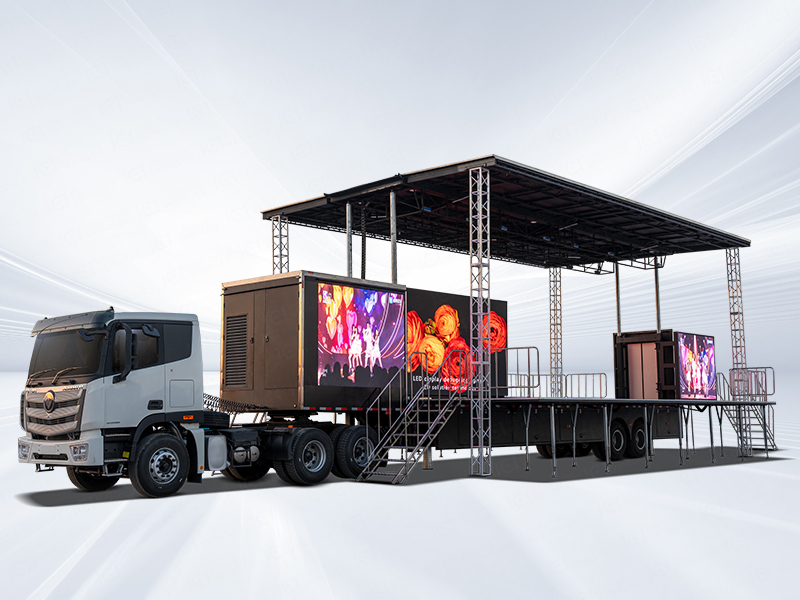
An early deployment directly influences the cost of labor, the efficiency of the event and the flexibility in working. Modern expandable truck platforms feature an automated stage deployment system, smart hydraulic systems, and remote monitoring capabilities, making them easier to set up and safer to use.
With features like the mobile stage remote control, remote diagnostics and PLC-controlled automation, operators can deploy stages with fewer people and faster. For organisations holding many events, these technologies have become essential.
Q26. How long does setup take?
Ask for realistic deployment times under actual field conditions rather than ideal factory demonstrations.
Q27. Can one operator deploy the stage?
The use of a single operator can result in savings in man-hours and increased efficiency.
Q28. Is remote operation available?
It is possible to remotely operate the mobile stage through tablets, controllers, or any mobile device.
Q29. Hydraulic or electric deployment?
The difference between the smart hydraulic and the electric actuator should be considered.
Q30. Backup deployment system?
Have a backup plan for how to deploy in case the first plan doesn’t work.
Q31. Weather safety sensors?
Systems for monitoring wind, tilt and load help to protect personnel and equipment in bad weather.
Q32. Automation Certification?
Ask for a certificate to demonstrate that the automated stage deployment system is safe.
Q33. Emergency stop function?
Emergency stop controls will cease any movement safely and will not be removed from the system during normal operation.
Q34. Maintenance requirements?
Know about service schedules, inspections, software upgrades, and yearly maintenance costs.
Q35. Training support provided?
Determine if operator training, installation assistance, manuals, and refresher courses are part of the package.
An additional advantage of remote diagnostics is its ability to identify potential problems before turning into on-site problems. These are complemented by the automated stage deployment and intelligent hydraulic systems, which contribute to maximizing uptime and improving operational reliability.

Whether providing AV solutions to professionals or homeowners, the audience experience must be defined. Today’s mobile stages deliver high-performance lighting, LED displays, live production tools and streaming in one platform.
Buyers in 2026 look for more mobile integrated stage lighting, LED billboard truck, live streaming, and centralized AV control functions as standard.
Q36. Lighting capacity available?
Clarify on the capacity of lights, control mechanisms, and scope for upgrading as well as for future use.
Q37. Screen compatibility for LED screens?
Consider factors such as screen size, luminosity, resolution, and installation considerations.
Q38. Sound coverage range?
Ask for the certified coverage of the audience, information about speakers and amplifiers.
Q39. Power consumption level?
Make sure that the power from the generator is enough for lighting, sound equipment, LED screens, and even board systems.
Q40. Live streaming availability?
Make sure that the platform is compatible with live streaming services.
Q41. Integrated control systems?
A single system for control will simplify all processes and require fewer crew.
Q42. Video production opportunities?
Look out for an option to change camera, broadcasting, and production settings.
Q43. Recording options?
Look for camera input, broadcast output, and production switching capabilities as part of the mobile stage accessories package.
Q44. Audience engagement tools?
It will be good to consider a polling system and social media communication capabilities.
Q45. Scalability options?
Confirm the ability for future light, LED screen and sound upgrades without major modifications.
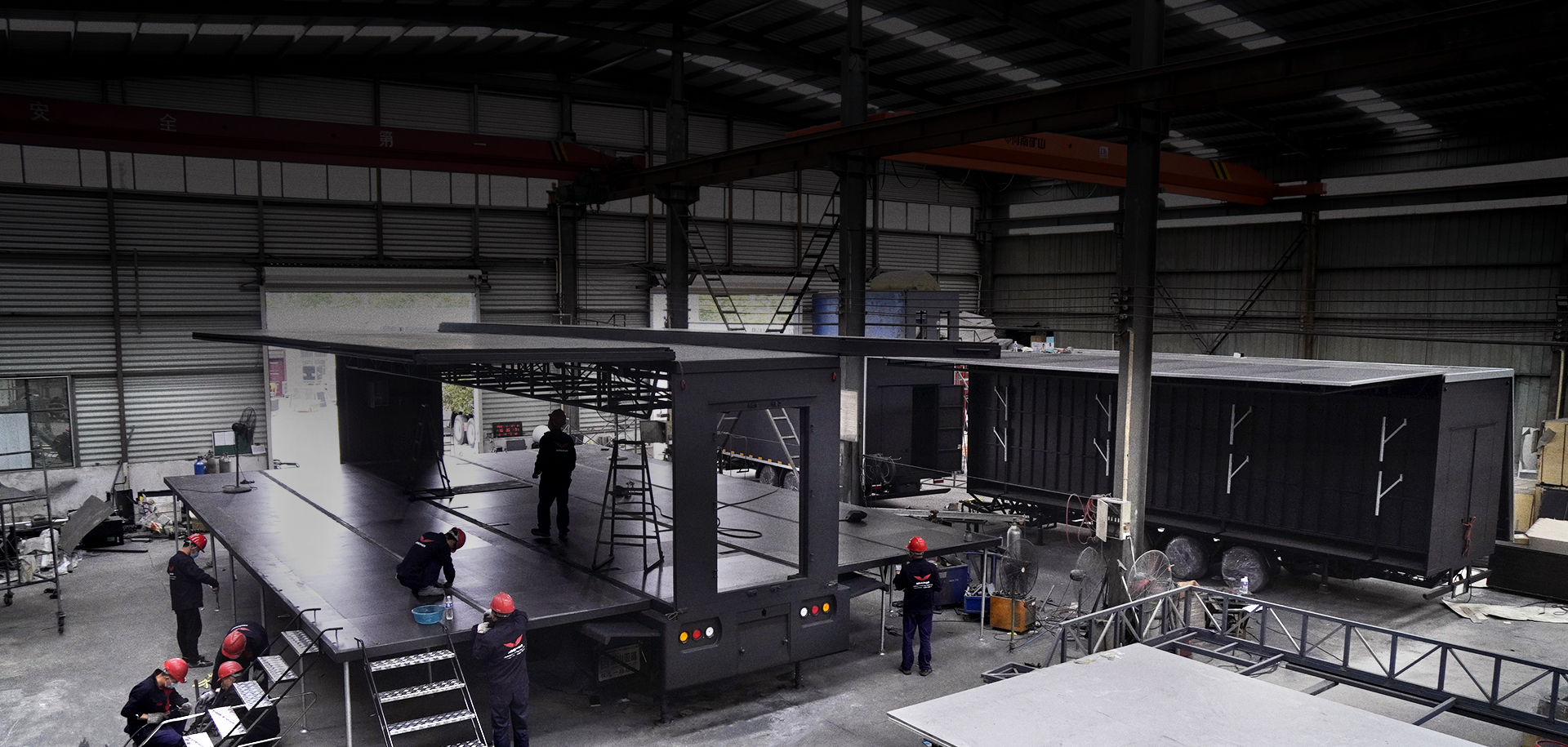
The key to selecting the right truck is actually selecting the right supplier. A good manufacturer offers solid products, dependable service and its support over the long haul.
Seek manufacturers with a proven track record, certifications, replacement parts, and after-sales service.
Q46. How many units have they delivered?
This question can be used to confirm manufacturing experience and consistency.
Q47. Can they provide case studies?
Case studies and customer references prove the real-life performance of the company.
Q48. International certifications?
Check ISO, CE, etc. certifications applicable to your market.
Q49. Spare parts availability?
Quick availability of spare parts reduces downtime and secures events. This is especially critical for mobile stage rental operators whose revenue depends on uptime.
Q50. After-sales support network?
Review service response time commitments, technical support coverage, and warranty assistance before finalizing any mobile stage truck buying decision.
FAQ 1: What Is A Mobile Stage Truck?
A mobile stage truck is a specially designed vehicle that transforms into a fully operational performance stage through hydraulic or electric extensions. High-specification audio, mobile stage lights, LED screens and generator power all come standard in modern units, allowing full-scale, production-grade event coverage in any location, irrespective of venue provisions.
FAQ 2: How much does a mobile stage truck cost?
Truck size, stage configuration, automation, AV setup and customization requirements all affect the cost. Be sure to ask for an itemized quote so you can accurately compare suppliers.
FAQ 3: How long does it take to set up a mobile stage truck?
Full deployment of an advanced automated system and mobile stage remote control requires only 10–15 minutes by a single operator. Normally 20 minutes – 2-3 man crew with standard hydraulic systems.
FAQ 4: What should I look for when choosing a mobile stage manufacturer?
Look for ISO 9001-certified mobile stage manufacturers who have verifiable delivery experience internationally and after-sales guarantees. A mobile stage manufacturer with Factory Visit access, good Client references and local Spare Parts supply represents much less operational risk than one based purely on the purchase price.
FAQ 5: What Can an Intelligent Roadshow Truck Do for You?
An intelligent roadshow truck puts GPS tracking, smart telematics, predictive maintenance alerts and AI fleet monitoring into the vehicle platform. These features minimize downtime, limit life cycle maintenance expenses and enable data-driven operational intelligence, enhancing efficiency in multi-city routing and scheduling operations.
FAQ 6: Do mobile stage trucks handle LED screens and lighting?
Yes. Most modern mobile stage truck units can accommodate built-in LED screen assemblies, in addition to professional mobile stage lighting systems featuring DMX control and AI-equipped fixture management. Ask your supplier before ordering how many LED panels, what size your screen is, how many light fixtures, and the capacity of the total generator.
FAQ 7: Is a mobile stage remote control system necessary?
Mobile stage remote control provides a lot of advantages for organizations with thin event crews or small deployment schedules. It helps to deploy a stage with one operator, enhances on-site safety, and allows for live diagnostics to be performed remotely, providing for a quicker response to uncovered problems before any further on-site issues arise.
FAQ 8: What certifications should be required of a stage truck manufacturer?
For target markets, look for ISO 9001, CE marking and road vehicle compliance certification. The mobile stage equipment has been designed to actual international safety requirements, not minimum local requirements, and further evidence of this is found in structural wind-load certification and automation safety standards like ISO 13849.
FAQ 9: How does an expandable truck improve event operations?
The expandable truck stage allows for more performance without increasing the vehicle’s road footprint. Lateral wing extensions and overhang roof projects can double the staging area while allowing production size, configuration and audience engagement capacity increase without the addition of staging equipment or transport costs.
FAQ 10: What questions should I ask before signing a purchase agreement?
In addition to this checklist, take the time to pay attention to delivery milestone schedules with contractual penalties, warranty exclusion clauses, spare parts pricing commitments, after-sales response SLAs, and resale value provisions.
In 2026, the mobile stage truck market will be bigger, more powerful and more sophisticated than ever before. When consumers make a conscious effort to evaluate mobile stages by asking questions, they consistently make better purchasing decisions than customers who “shop around” and compare quotes and brochures. When considering an event stage truck for government or corporate events, a mobile stage for touring to multiple locations, or a large-format production truck for entertainment, here are 50 questions that break down each dimension you need to consider.
Use this checklist in every supplier conversation. Expect concrete, specific responses. Visit factories. Engage with the customers directly who are already using the service. Ask for demonstrations in the actual field situation. Sinoswan’s engineering and sales team will be on hand to help you with any of the questions on this list, and to link your specific needs with the right mobile stage truck configuration for your events in 2026 and beyond.