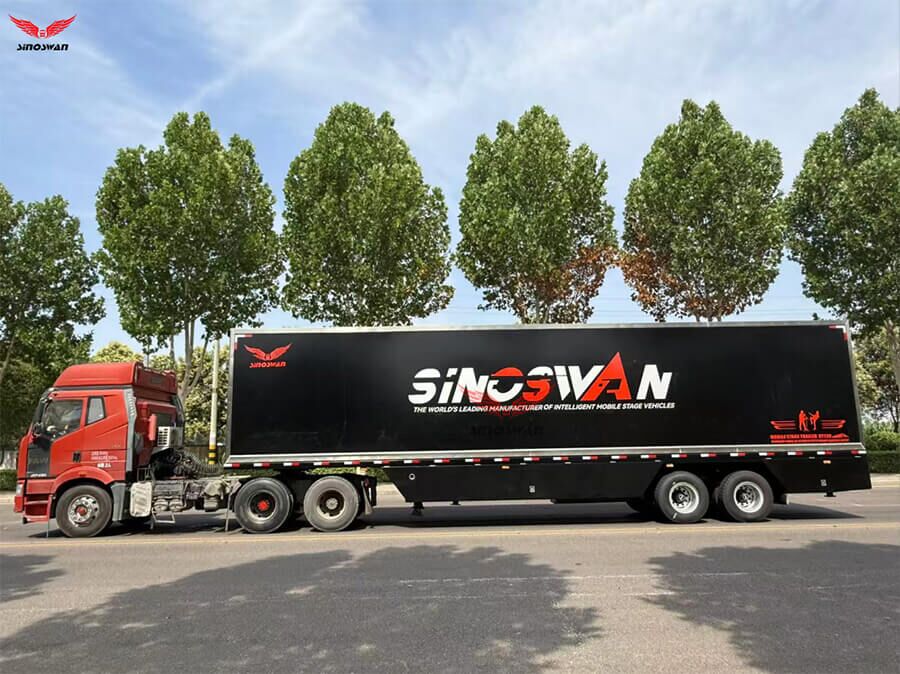
The events industry of 2026 will be changing at a very fast pace, as speed and efficiency will be the key to success in the industry. In politics, music events, and marketing, there is a growing realization that downtime should be minimized while enhancing efficiency. This has made it necessary to have fast deployment methods, especially in the form of better stage mobility, such as the mobile stage, mobile stage trailer, and mobile stage truck.
The conventional staging systems are usually labors intensive and crew-intensive, and they also take hours to assemble. However, with modern hydraulic stage technologies, events can be established in minutes as opposed to hours. That is where the idea of a mobile stage truck comes into play, being the speediest and most convenient solution to the current dynamism of events and a true fastest stage setup solution.
In 2026, the best mobile stage trailer will be ready for use within 10-30 minutes. These trailers can easily be converted into stages with minimal human intervention through fully automated hydraulic systems, offering a highly efficient and fast stage deployment system for tour performances.
Nowadays, time is not merely a limitation in event planning; it is a competitive edge. A more efficient setup is directly translated into improved efficiency, lower costs, and increased audience engagement.
Organizers of events usually have to take care of various performances in various places within one day. A quick deploy stage trailer facilitates the easy transition of venues, particularly during campaigns and promotional tours.
Stage assembly is traditionally a large team effort. Quick deployment systems minimize human efforts, lowering the cost of operation.
Quick setup means more time for rehearsals and performances, improving the overall event stage truck setup time efficiency.
A rapid solution, such as a hydraulic stage trailer, can be important in times of emergencies.
Firms that are able to provide an automatic stage truck have a distinct advantage over their counterparts who use the slow-moving, traditional systems.
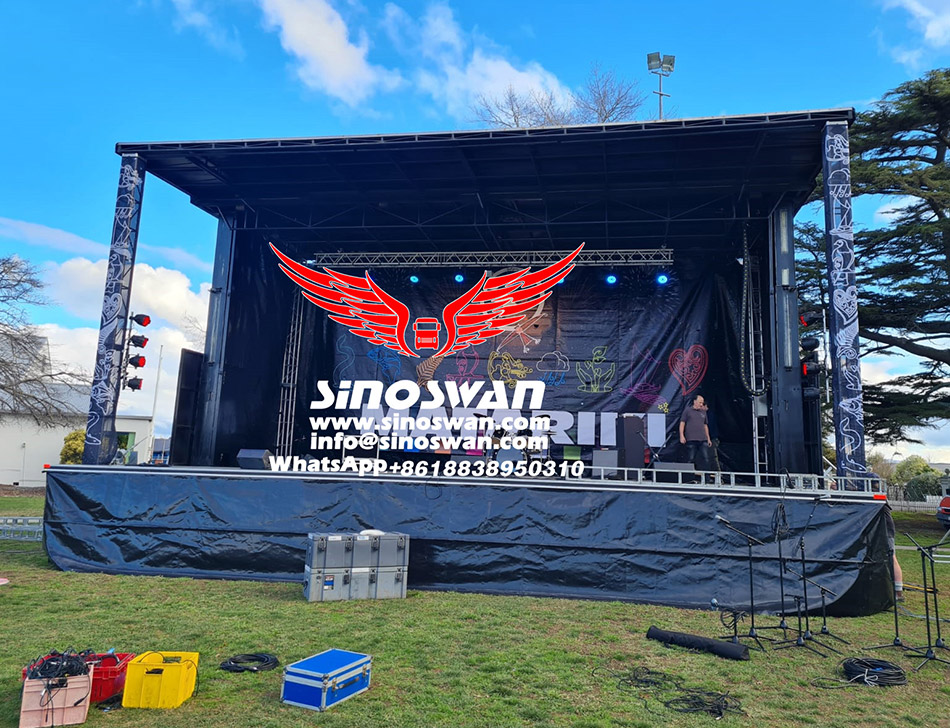
The contemporary stage systems are designed to be fast, accurate, and require little human effort. The hydraulic system with one button enables the whole structure to change to a stage that has all the features of a transport mode within minutes.
By pressing a button, the side wings will be extended to form the main stage floor. This eliminates the need for manual assembly and ensures consistency always.
The roof is elevated by hydraulic lifting mechanisms. It is simple and easy to manage, and it provides immediate protection from the elements.
The whole deployment is driven by heavy-duty hydraulic cylinders. These parts are very efficient in lifting, unfolding, and positioning, and save time and physical effort.
After the stage is completely set up, it is automatically locked up using integrated locking systems. This provides stability, safety, and performance preparedness without the need for additional adjustments.
The entire system can be likened to a truck that has expandable capacity since everything is already built in and can be set up at once.
The difference between the two methods of staging is quite large, especially when considering the aspect of time and manpower.
|
Stage Type |
Setup Time |
Labor Required |
|
Traditional Stage |
6–10 hours |
8–12 people |
|
Semi-Automatic |
2–4 hours |
4–6 people |
|
Hydraulic Stage |
10–30 minutes |
1–3 people |
The difference between the two methods of staging is quite large, especially when considering the aspect of time and manpower.
The conventional structure is made up of several components, requires manual assembly, and involves extensive planning. Semi-automatic systems are very effective in their use; however, they are not completely effortless. The hydraulic system dramatically reduces setup time.
A modern trailer stage has become highly automated and is much more efficient than the older staging techniques.
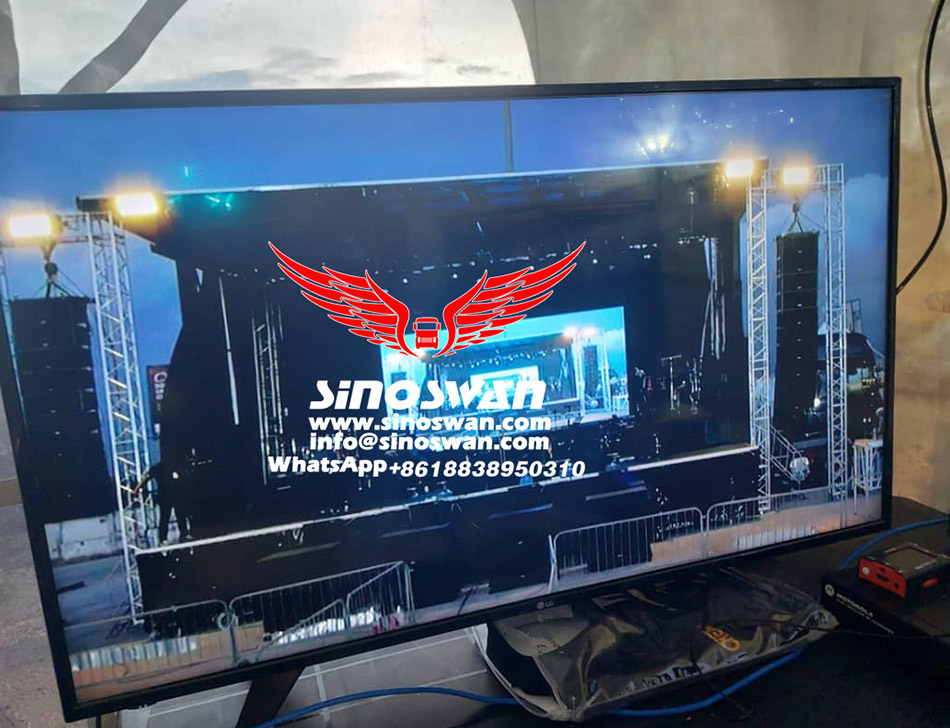
With the ever-increasing demand for rapid deployment, manufacturers are coming up with very efficient staging systems that are fast and convenient. The fastest options at the time of 2026 are compared below, based on their setup time and degree of automation.
As a middle-ground solution, this system usually requires between 20 to 30 minutes before it can be fully set up. As a combination of semi-automatic hydraulic systems and some degree of manual handling, it is both practical and affordable. It is for this reason that it is ideal for use in mid-size occasions like community events, regional promotions, and tour shows. It is, however, not as quick as a fully automated system but still quicker than traditional set-ups.
The basic extendable model is an easy option for smaller applications or budget-conscious organizers, taking anywhere from 30 to 60 minutes to set up. It involves a lot more manual labor, but it is also semi-automated, making it relatively easier to deploy. The model is typically used in local events, short-term exhibitions, and performances that do not require extremely fast assembly.
The simple expandable model is a simple solution to smaller-scale operations or low-budget planners, with a setup time between 30 and 60 minutes. It requires more manual work, but it is also partially automated, which makes the deployment process easier. This system is normally applied to local events, temporary installations, and small performances where ultra-fast setup is not the major concern.
In general, every mobile stage trailer category is intended to support various operational requirements to enable event planners to choose the most adequate one depending on the size of the event, budget, and required setup time.
The difference in setup speed is much easier to understand when put into a time-lapse perspective. The 10-minute deployment is the highest level of efficiency, as a fully equipped stage can change practically overnight into a functioning platform. This is best suited to urgent deployment in real-life situations, multi-stop campaigns or where timing is of the essence and there is no time to waste.
The setup process is also very efficient at the 30-minute mark, but it does not imply so much customization and adjustments. This is a period that is often observed in the semi-automated systems, whereby crews might spend a few additional minutes in the stage elements and lighting or branding elements. It provides a realistic tradeoff between speed and flexibility and thus can be used in mid-scale events and planned programs.
Expanded to 60 minutes, the setup procedure indicates simple expandable systems with additional manual input. Although still much faster than traditional staging techniques, this period is usually linked with smaller events or cost-efficient deployments. These arrangements are typically employed in real-life situations of local meetings with moderate time pressure.
Rapid execution is a critical factor in ensuring successful events in different industries. Regardless of whether the aim is to engage the audience, increase brand awareness, or reach out to the public, the speed at which one can establish themselves can make the whole event successful. Fast deployment systems, often built like an expandable truck, make it easier to manage complex event logistics efficiently.
Political campaigns may be hectic with different rallies in different cities taking place on the same day. Stage setup delays may cause timing disruptions, diminish audience interest, and curtail reach in general. Quick deployment structures allow teams to be up-to-date and have maximum presence by region.
The campaign stage truck allows organizers to have a professional stage in minutes, allowing speeches and performances to start on time. On a larger scale, an election campaign truck is mobile and efficient in that it facilitates smoother movement between destinations and allows the campaigns to serve a greater number of people within a shorter period.
Religious events are often held in remote or rural locations with limited infrastructure and manpower. Moving heavy machinery and constructing traditional stages in these places may take time and be difficult to do, particularly during unforeseen weather patterns.
A mobile stage for religious events is a viable option as it can be set up quickly and reliably, even in challenging locations. Such a low-need structure enables organizers to concentrate more on the event itself and less on logistics, thereby creating a smooth and effective event to attend.
Both music festivals and concerts follow a strict schedule, and various performances and very strict timeframes may be involved. Any inconvenience created by stage preparation may affect the entire lineup, unhappy crowds, and operational problems.
An outdoor event mobile stage and a portable concert stage truck can be installed and dismantled, hence enabling the back-to-back performances or even overnight preparation to be easily handled. Such flexibility will ensure that events will be held in time without compromising the quality of production and levels of safety.
Charity events and community programs usually have a low budget and can only be successful with proper planning. Traditional stage setups can be time and resource consuming that can be utilized in other important activities.
The mobile stage to host charity events can enable the organizers to have a professional setup at minimal cost. This will enable more attention to be put on the aim of the event, be it fundraising, awareness, or community involvement, without the heavy burden of complicated logistics.
Activations of brands and promotional campaigns require flexibility and speed, particularly when dealing with various locations in a limited time. The establishment of traditional stages can be repeated, which may slow down the campaign and decrease its overall effect.
A marketing trailer or event marketing trailer enables the brands to carry out roadshows and product launches effectively. Having fast installation features, organizations are able to reach audiences, convey their message, and move to the next destination in a short period of time, ensuring maximum coverage and profitability.
The contemporary stage trailers have ceased being merely structural platforms; they are multimedia solutions with high-impact visual experiences.
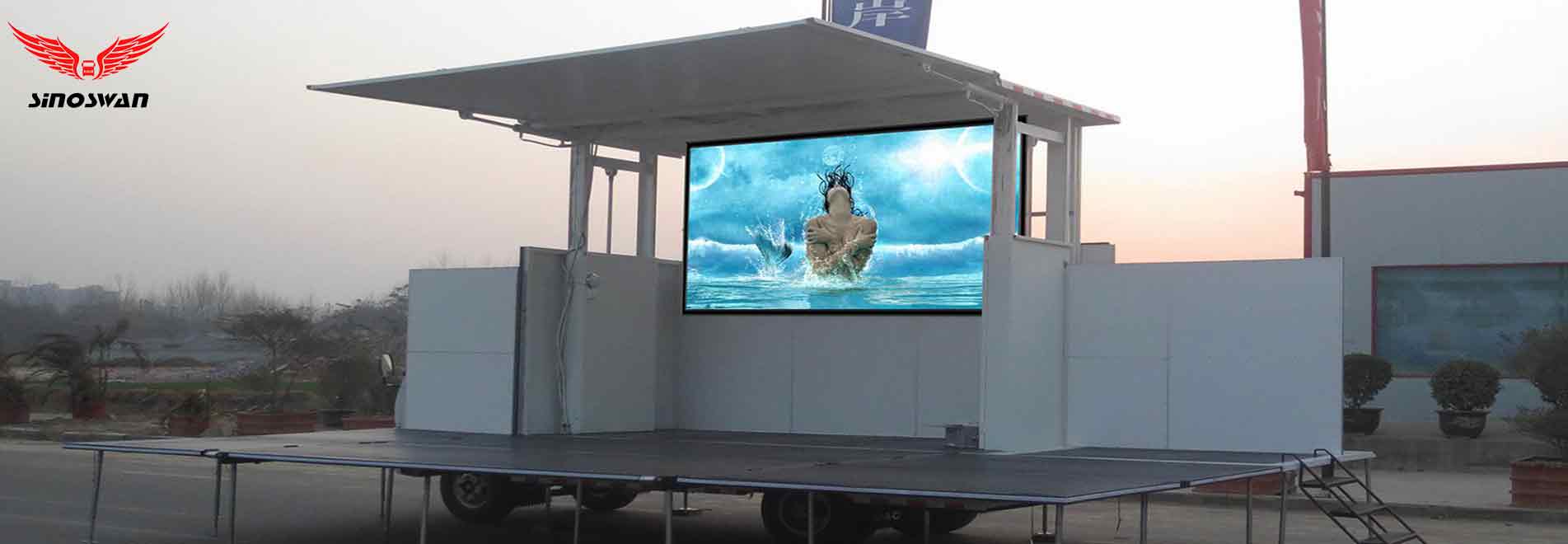
One of the best advantages of the contemporary systems is the ability to install a led screens trailer in a short period. Ready-assembled mounting frames and brackets enable the installation of a screen within several minutes, saving a lot of time. This ensures that there is no latitude for visual elements to be ready at this stage.
Multi-location events also help in performance due to quick setup. Teams can create and delete screens fast, thus making changes smoother, and all events are projected to a similar level of visual quality.
Many stage systems have included wiring and power connections to make them even easier to install. This eliminates the manual cable layout, which can be time-consuming and prone to errors.
Ready-built systems enhance safety as well, as they reduce loose cables and ensure proper electrical control. The technicians can therefore focus on the quality of performance rather than technical troubleshooting.
The modern stages are fitted to be compatible with an LED display trailer and can easily incorporate large digital screens that can be used to present and advertise or even broadcast a live event. This compatibility guarantees the possibility of delivering visual content without any further structural changes.
Such integration is especially useful for large-scale events where high-resolution displays are essential for audience engagement and communication.
As well as normal display units, the systems are also compatible with an LED screen trailer, which can be used to accommodate various event sizes and formats. This enables planners to expand their visual system according to certain needs.
This flexibility can adapt the stage equipment to technical and aesthetic requirements, whether it is a small community event or a massive concert.
To achieve maximum visibility, most events now have an LED billboard truck with the stage. These mobile billboards increase the reach of the audience by promoting or showing live content or announcements.
This is a combination of stage and mobile advertising, resulting in a strong visual appeal to events, making them more interesting and ensuring that the perfect message is transmitted to a large number of people.
When evaluating modern staging solutions, one of the most common questions is whether faster setup justifies the higher investment. Advanced systems can also be more expensive to install, although the overall financial and operational benefits can be seen to surpass the cost.
The advanced engineering, hydraulic, and integrated features that are used to construct fast deployment systems naturally inflate their purchase prices. Nevertheless, these systems do not require spending on large crews, logistics of transport, and long-lasting installations.
With time, the labor, time, and operational efficiency savings start to offset-and even exceed- the original investment. This change is even more evident to businesses that hold regular events.
Conventional stage arrangements have several workers to assemble, align, and disassemble. This not only makes it more expensive but also makes it more complex to manage the event.
Only a few people are required to manage the entire process with automated systems. This manpower reduction will reduce operational costs and also make coordination and execution easier.
In the case of rental companies, time is directly associated with revenue. Quick setup implies that equipment can be utilized at multiple events in a reduced duration of time.
This allows for increased efficiency in ROI as well. Instead of staging their system on one occasion all day long, it is possible for them to use their equipment on multiple occasions.
Speed creates opportunity. When setup and teardown can be done in minutes, rather than hours, businesses can plan more events in the same period.
This flexibility in managing numerous reservations per day will greatly increase revenue potential. Speed is one of the factors that can be the difference maker in the long run and growth in competitive markets.
This makes a mobile event stage truck a smart investment for event companies.
The speed at which modern stages operate is driven by smart engineering, which minimizes manual labor. The features listed above come together to make it possible to install quickly, employ fewer people, and make the work easier for events.
With hydraulic automation, the entire stage can be opened, lifted, and securely positioned without much effort, frequently under the supervision of one operator. This saves time that would otherwise be spent assembling everything manually and ensures consistent and precise installation.
Embedded wires and embedded power connections eliminate the use of complex wiring systems during installation. This not only accelerates the process but also minimizes technical errors and enhances the overall safety.
Foldable stage parts are developed in such a way that they can be easily expanded and contracted so that a stage can be converted into a transport mode within a short time. The design considerably reduces the time of setup and still remains structurally stable.
A smaller design will make sure that all the elements are conveniently fit into a single unit, eliminating the complexity of transportation and setup time. It also enables easier placement in various event venues, even where space is limited.
Flexible designs enable the same stage to be reused in various kinds of events with minimal modifications. These flexible event stage offerings enable organizers to save time by minimizing the time spent on making repeated adjustments between stages.
Continuous design innovation has led to rapid development of stage technology in speed, durability, and ease of use. Contemporary stage trucks are designed using high-tech materials and smart technologies that permit quick setup and operational stability and flexibility to accommodate various event types.
In modern stage trucks, there are high-strength, but low-weight steel main frames, which have lowered the weight of the vehicle, without affecting the durability of the truck. This simplifies transport and enables better fuel economy, as well as permitting quicker unfolding and placement in the setup.
State-of-the-art control systems allow accurate and coordinated motion of stage elements. The operators have the ability to control the whole deployment process by using simple controls that ensure smooth running and eliminate the chances of errors or delays.
Modular designs allow individual parts of the stage to be extended independently according to the demands of the occasion. This not only makes setting up faster, but it also makes customization easy without making any additional changes to the structure.
Innovative opening mechanisms increase the number of sides that can expand and create more usable space. This allows it to vary the stage layout easily, based on the size of the audience and the type of event.
Hydraulic stage trucks are set up faster as the unfolding of platforms, raising of roofs, and locking of structural components are automated with minimal operator intervention. This simplified procedure reduces the installation time by several hours to less than 30 minutes, and they are very effective in events that require action quickly and when handling multiple locations.
What is the fastest mobile stage setup time?
The most recent mobile stage systems can be set up in about 10 to 30 minutes, using completely automated hydraulic technology, making them the quickest staging systems compared with older methods.
How many people are needed to set up a stage truck?
With the majority of work being automated, most modern stage trucks only need 1 to 3 operators to be fully operational.
Are hydraulic stage trucks safe?
Yes, hydraulic stage trucks are built with enhanced safety measures like locking systems, support systems, and controlled movements to ensure safe working during configuration and application.
Can stage trucks be used in rural areas?
Stage trucks are most appropriate in rural and remote areas since they need very little infrastructure and can be set up within a short time with limited manpower.
Which events have fast setup phases?
Quick set-up phases suit well with concerts, political rallies, religious meetings, charitable events, corporate events, and promotional campaigns where time is paramount.
Are fast setup stage trucks more expensive?
They are normally expensive in the beginning because of the advanced technology; however, they save long term by saving labor cost, speed of deployment, and also the capacity to serve more events within the same time span.