SINOSWAN Makes Outdoor Events Grander, Quicker, Safer.
✦How Does SINOSWAN Test the Rainproof Performance of Its Products?
Outdoor event equipment must be designed for more than appearance and functionality. It must also be prepared for changing weather conditions. Rain can affect exterior panels, roof joints, door seals, electrical enclosures, cable connections, display equipment, and the usability of an event space.
At SINOSWAN, rainproof testing is an important part of demonstrating how product design and manufacturing quality address these practical challenges. By applying water to the assembled product and inspecting vulnerable areas, the testing process helps identify potential water-ingress risks before equipment is delivered to customers.
For mobile stage systems and mobile banquet vehicles, this is particularly important. These products combine large structural assemblies with electrical equipment, moving components, access doors, roof sections, and multiple connection points. Their performance depends not only on the quality of individual components but also on how those components are integrated into the finished product.
Our approach is to make quality visible, verify performance through inspection, and take responsibility for the equipment we manufacture.
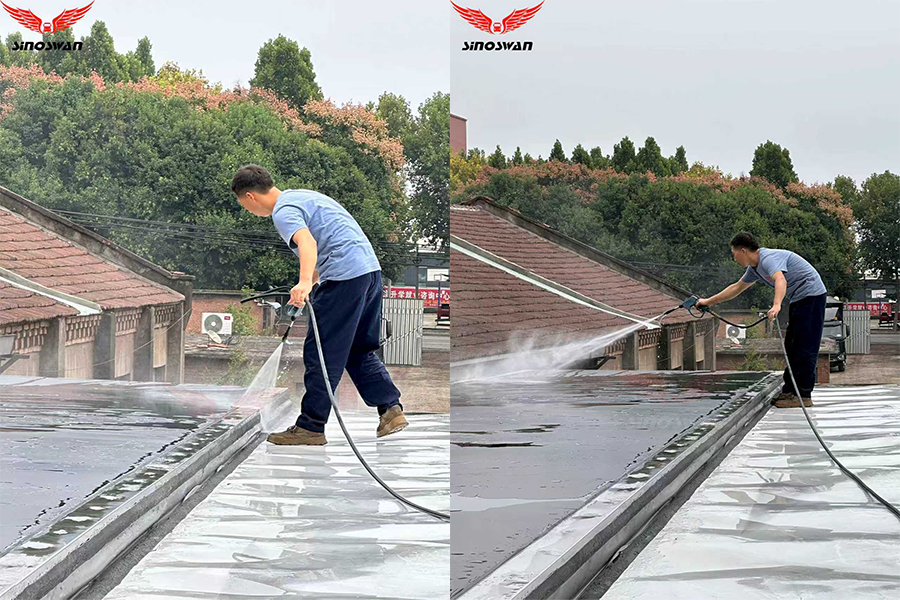
1.Why Is Rainproof Testing Important for Outdoor Event Equipment?
Mobile event equipment is frequently transported between locations and operated outdoors. During its service life, a product may encounter rainfall, wind-driven water, moisture, dust, and changes in temperature.
Potential water-entry points can include:
✓Roof joints and panel connections
✓Doors, windows, and their sealing interfaces
✓Exterior panel joints
✓Cable-entry points and electrical enclosures
✓LED display installation areas
✓Roof edges, drainage paths, and other water-management details
✓Connections around movable or expandable structures
Rainproof testing helps the production and quality teams examine these areas under defined test conditions. It can reveal visible leakage, ineffective sealing, water accumulation, or other conditions requiring further inspection.
The purpose is not simply to show that water has been sprayed onto a vehicle. The purpose is to check how the assembled product responds to water exposure and whether any observed issues require correction before delivery.
2.How Is a Product Rainproof Test Conducted?
A practical rainproof inspection should follow a controlled process rather than rely on visual impressions alone.
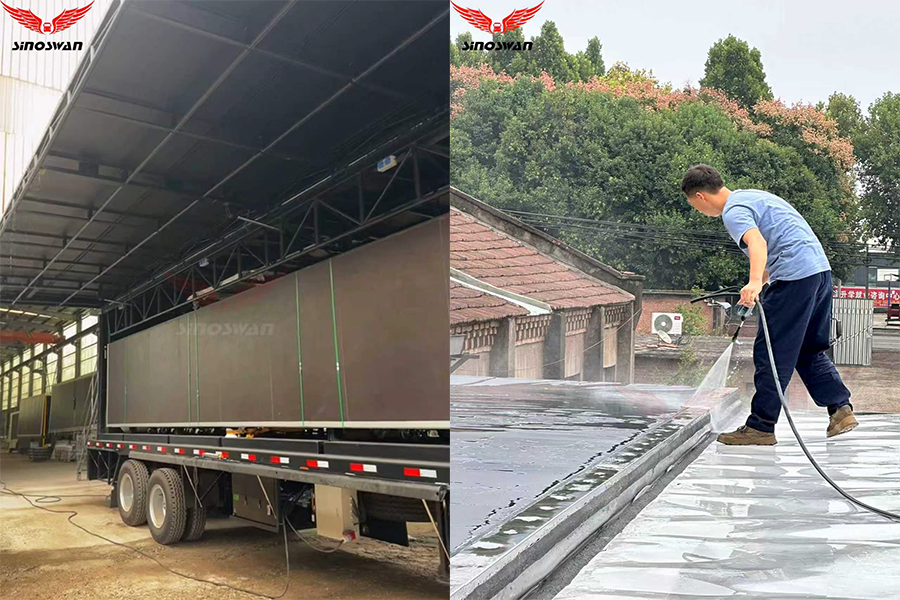
➤Step 1: Prepare the product
Before testing, the product is placed in the appropriate configuration for inspection. Relevant doors, roof sections, exterior panels, and access points are checked to confirm that the product is assembled as intended.
The team identifies areas where water may enter and confirms that the test conditions are suitable for the product being evaluated.
➤Step 2: Apply water to the exterior
Water is directed over the relevant exterior surfaces and connection areas. The purpose is to examine the behavior of roof joints, door seals, panel connections, and other potentially vulnerable points under the selected test conditions.
The water application should be consistent with the inspection plan. The test report should record the water application method, duration, and other relevant conditions rather than relying on an undocumented visual demonstration.
➤Step 3: Inspect potential leakage points
During and after water exposure, the inspection focuses on areas where water ingress could affect the product’s structure, interior, electrical equipment, or operation.
The inspection may include:
✓Checking for visible water penetration
✓Examining door and panel sealing
✓Inspecting joints and connections
✓Checking the interior for unexpected moisture
✓Examining accessible electrical enclosures and cable-entry points
✓Recording any water accumulation or drainage concerns
➤Step 4: Check the relevant equipment
Where appropriate to the product and approved test procedure, the inspection continues with checks of affected equipment and systems.
Electrical equipment should be examined and handled according to the relevant safety procedure. Any suspected water ingress near energized components must be managed safely by qualified personnel.
For products containing hydraulic systems or movable structures, any additional functional checks should follow the manufacturer’s operating and safety procedures.
➤Step 5: Record findings and address issues
A responsible quality process records the test date, product model or serial number, inspection areas, test conditions, observations, and final disposition.
If leakage or another issue is identified, the affected area should be investigated, repaired where necessary, and retested according to the applicable procedure.
The purpose of this process is continuous improvement: identifying a potential problem, correcting its cause, and verifying the effectiveness of the correction.
3.Rainproof Testing of Mobile Stage Equipment
Mobile stages combine structural systems with electrical and audiovisual equipment. Their outdoor use makes the management of water exposure an important consideration.
For a mobile stage such as the SINOSWAN ST130, the relevant inspection areas may include exterior panels, roof or canopy interfaces where fitted, cable-entry points, electrical enclosures, LED display connections, and other exposed joints.
The exact inspection points depend on the specific model and configuration. A feature should not be assumed to be present on every model.
The purpose of rainproof inspection is to identify potential risks at the interfaces between the structure and the installed equipment. This is particularly important when several systems are integrated into one mobile platform.
A product’s structural strength and hydraulic functionality do not, by themselves, establish its level of protection against water. Rainproof performance needs to be assessed separately under appropriate conditions.
For customers purchasing outdoor stage equipment, the relevant evidence may include inspection photographs, test videos, model-specific records, corrective-action records, and any applicable third-party test documentation.
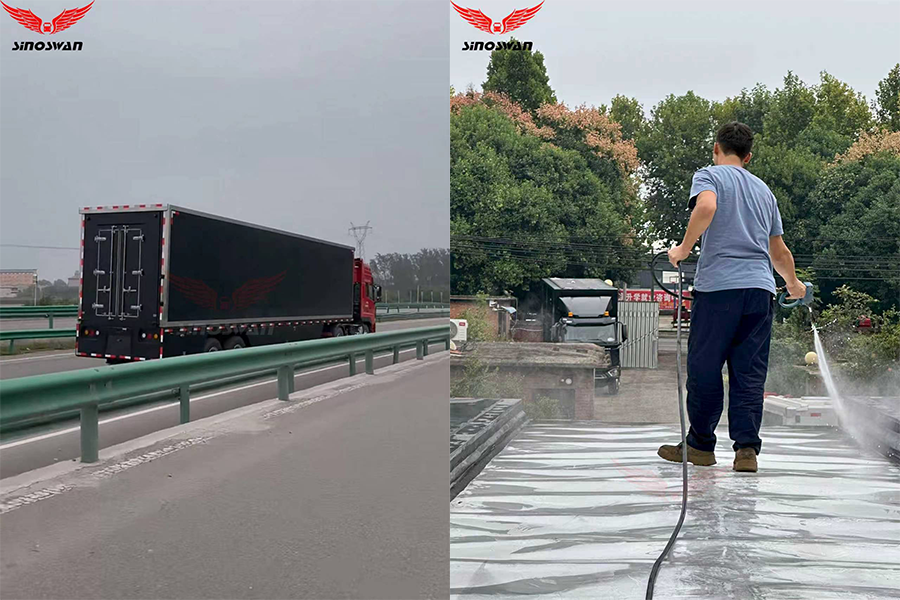
4.Rainproof Testing of Mobile Banquet Vehicles
Mobile banquet vehicles present a different set of inspection considerations because they may include enclosed interior spaces, roof-lifting mechanisms, expandable structures, doors, windows, electrical systems, lighting, and air conditioning.
For the SINOSWAN SBT series, the relevant inspection areas can include roof joints, exterior panels, door and window seals, electrical entry points, and connections around movable structural sections.
For example, the SBT1712 configuration includes a hydraulically lifted roof and expandable structural functions. These features make the relationship between moving components, exterior panels, and sealing interfaces particularly important to inspect.
A suitable rainproof inspection should consider the product’s intended operating configuration and the areas that may be exposed to water during use.
However, a rainproof test does not automatically establish that every possible configuration is watertight. If a structure has separate transport and expanded operating configurations, the inspection plan should specify which configuration is being tested and what the results demonstrate.
This approach provides customers with clearer information about the actual scope of the inspection.
5.Rainproof Testing and Compliance Requirements
A factory rainproof test and formal compliance certification are related but different activities.
A factory test provides evidence about a product’s performance under the conditions used in that test. Formal compliance requires the applicable requirements to be identified and the product to be evaluated using the relevant methods and acceptance criteria.
For electrical equipment used in road vehicles, ISO 20653:2023 addresses degrees of protection provided by enclosures against foreign objects, access to hazardous parts, and water ingress. The standard specifies requirements and test methods for the relevant IP classifications. The International Electrotechnical Commission’s IEC 60529 addresses degrees of protection provided by enclosures, commonly expressed through IP codes. These standards have defined scopes; they should not be treated as blanket certifications for an entire mobile stage or banquet vehicle. (ISO 20653:2023; IEC 60529)
For SINOSWAN products, the applicable requirements depend on the product category, the equipment being assessed, the destination market, and the customer’s specifications.
A responsible compliance process should therefore establish:
1.The product scope: Which vehicle, system, enclosure, or component is being assessed?
2.The applicable requirements: Which national regulations, customer specifications, or technical standards apply?
3.The test method: How will the relevant water-exposure conditions be reproduced?
4.The acceptance criteria: What observations or measurements determine whether the test has passed?
5.The supporting records: What evidence demonstrates the result?
6.The corrective-action process: What happens if the result does not meet the defined criteria?
A rainproof inspection can support internal quality control and provide useful evidence for customers. An IP rating or other formal compliance claim, however, should be made only when supported by the relevant testing and documentation.
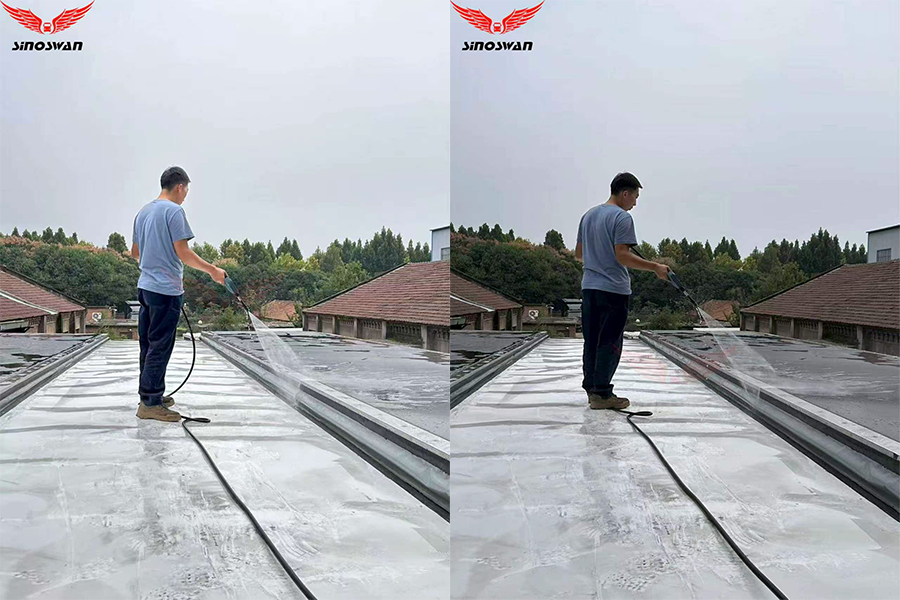
6.Quality Standards: From Inspection to Verification
Quality is not established by a single test or a single inspection photograph. It is built through a sequence of activities across the manufacturing process.
For SINOSWAN, a practical quality-control framework for mobile event equipment can include the following stages.
Incoming component inspection: Confirm that relevant materials and components meet the specified purchasing and engineering requirements.
Structural inspection: Examine fabrication, joints, assembly dimensions, and relevant structural details.
System installation checks: Inspect the installation of hydraulic, electrical, audiovisual, and other product systems as applicable.
Sealing and rainproof inspection: Examine selected exterior joints, doors, panels, cable entries, and other potential water-entry points under defined test conditions.
Functional testing: Verify relevant operating functions according to the product’s inspection plan.
Final quality inspection: Record outstanding issues, confirm corrective actions, and establish whether the product is ready for the next stage of delivery.
Documentation and traceability: Retain relevant inspection results, photographs, test records, and product identification information.
The precise checks and acceptance criteria should be adapted to the product and its contractual requirements. The purpose of a documented quality process is to make product condition and inspection results traceable rather than relying only on general assurances.
7.Relevant Product Applications: Why the Test Scope Matters
|
Product category example |
Relevant inspection considerations |
Evidence customers can request |
|
Mobile stage, such as ST130 |
Exposed joints, exterior panels, electrical enclosures, cable entries, and installed display equipment |
Model-specific inspection records and relevant test photographs |
|
Mobile roadshow truck, such as SR40 |
Exterior panels, door seals, electrical interfaces, LED connections, and other exposed components |
Test scope, recorded observations, and applicable equipment documentation |
|
Mobile banquet vehicle, such as the SBT series |
Roof joints, doors, windows, exterior panel connections, and interfaces around expandable structures |
Configuration-specific inspection records and any applicable formal test reports |
These examples identify relevant areas for inspection; they do not claim that every model has completed the same rainproof test or received the same certification.
The model, tested configuration, conditions, and results should be clearly identified in the supporting records. This enables customers to understand which evidence applies to the equipment they are purchasing.
8.What Happens If a Rainproof Test Identifies a Problem?
A responsible quality process must address problems rather than merely document them.
If water ingress or another issue is found, the next steps should include identifying the affected area, investigating the likely cause, determining the appropriate corrective action, and checking the repaired area again under the relevant procedure.
Depending on the finding, corrective work may involve a seal, joint, panel connection, cable entry, drainage detail, or another component. The actual correction should be determined by inspection rather than assumed in advance.
The result should be documented so that the production and quality teams can understand what happened and whether the corrective action resolved the issue.
This process supports accountability in three ways:
✓It creates a record of what was inspected.
✓It provides a basis for corrective action.
✓It helps verify whether the action addressed the identified issue.
A commitment to quality means being prepared to investigate an unsatisfactory result, correct the underlying problem, and verify the outcome.
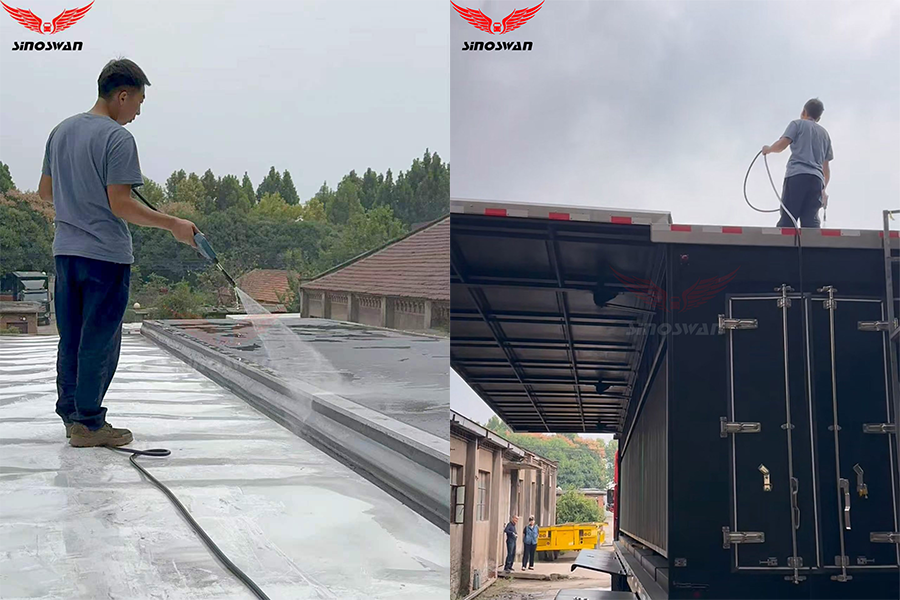
9.Our Commitment to Responsible Manufacturing
For outdoor event equipment, manufacturing responsibility extends beyond the factory floor.
Customers rely on equipment to perform in real operating environments. They need accurate information about product capabilities, the limits of any test results, the applicable compliance requirements, and the support available if a problem occurs.
SINOSWAN’s quality communication should therefore be based on clear and verifiable information.
We believe responsible manufacturing means:
✓Testing products according to defined procedures.
✓Inspecting relevant components and connections.
✓Recording results accurately.
✓Correcting identified problems and verifying the correction.
✓Explaining the scope and limitations of test results.
✓Providing applicable product and compliance documentation.
✓Supporting customers with appropriate technical guidance.
A test should not be described as a certification unless the corresponding certification exists. A product should not be described as completely waterproof solely because it has undergone a rainproof inspection. Likewise, an internal quality check should not be presented as independent third-party approval.
These distinctions protect customers and strengthen confidence in the manufacturing process.
10.Making Quality Visible to Customers
Photographs and videos can help customers understand how a product is inspected, but the most useful quality evidence combines visual material with identifiable product and test information.
For a rainproof test report or public case study, SINOSWAN can present:
✓The model and product identification
✓The product configuration during testing
✓Photographs or video showing the water application
✓Close-up views of inspected joints and sealing areas
✓The test date and documented conditions
✓The inspection findings
✓Any corrective action and retest results, if applicable
✓Relevant formal test reports or certificates, where available
This creates a clearer connection between the product shown, the procedure performed, and the conclusion supported by the evidence.
It also allows customers to distinguish a demonstration video from a formal test report and to assess the evidence according to their own project requirements.
✦Frequently Asked Questions
➤What is a rainproof test for mobile event equipment?
A rainproof test exposes relevant exterior areas to water under defined conditions and inspects for water ingress or other issues. The exact procedure and acceptance criteria depend on the product and the purpose of the test.
➤Why is rainproof testing important for mobile stages?
Mobile stages may combine exterior structures with electrical equipment, LED displays, and cable connections. Inspecting relevant interfaces helps identify potential water-ingress risks before the equipment is delivered or used outdoors.
➤Does a rainproof test mean a product is completely waterproof?
No. A test demonstrates performance only within its documented scope and conditions. It does not automatically prove that the entire product is waterproof in every environment or configuration.
➤Is rainproof testing the same as an IP rating?
No. IP classifications are defined through applicable standards and specific test requirements. A general factory rainproof inspection should not be described as an IP rating unless the relevant requirements have been assessed and the claim is supported by appropriate documentation.
➤Which standards may be relevant to water protection?
IEC 60529 addresses degrees of protection provided by enclosures, while ISO 20653:2023 addresses IP codes for enclosures of electrical equipment in road vehicles. The applicable standard depends on the equipment and the intended compliance claim. (IEC 60529; ISO 20653:2023)
➤What should a rainproof test record contain?
A useful record identifies the product and configuration, test date, method, conditions, inspected areas, findings, acceptance criteria, and any corrective action or retest. Additional evidence may be needed for formal certification or destination-market compliance.
➤What happens if leakage is found?
The affected area should be investigated, the appropriate corrective action taken, and the relevant inspection repeated according to the defined procedure. The findings and outcome should be documented.
✦Conclusion: Quality Is a Responsibility, Not Just a Claim
Rainproof testing is one practical way to examine how mobile event equipment responds to water exposure. For mobile stages, roadshow trucks, and banquet vehicles, it can help identify potential vulnerabilities around exterior panels, joints, doors, cable entries, electrical enclosures, and other relevant interfaces.
Its value depends on the quality of the process: a clearly identified product, appropriate test conditions, systematic inspection, accurate records, and corrective action when required.
At SINOSWAN, the commitment to quality should be demonstrated through manufacturing discipline, transparent evidence, appropriate compliance documentation, and responsibility for the products supplied to customers.
We do not regard quality as a slogan alone. We regard it as a process that must be inspected, documented, and continuously improved.
➟To know more about this quality test, please click the following video to watch the video: Watch now
➟SINOSWAN Makes Outdoor Events Grander, Quicker, Safer.
For inquiries and detailed specifications:
www.sinoswan.com
info@sinoswan.com
WhatsApp: +86 188 3895 0310/+86 186 3717 8390/ +8618538129701